Paramount demonstrates systems as it prepares to launch new light armoured vehicle at AAD

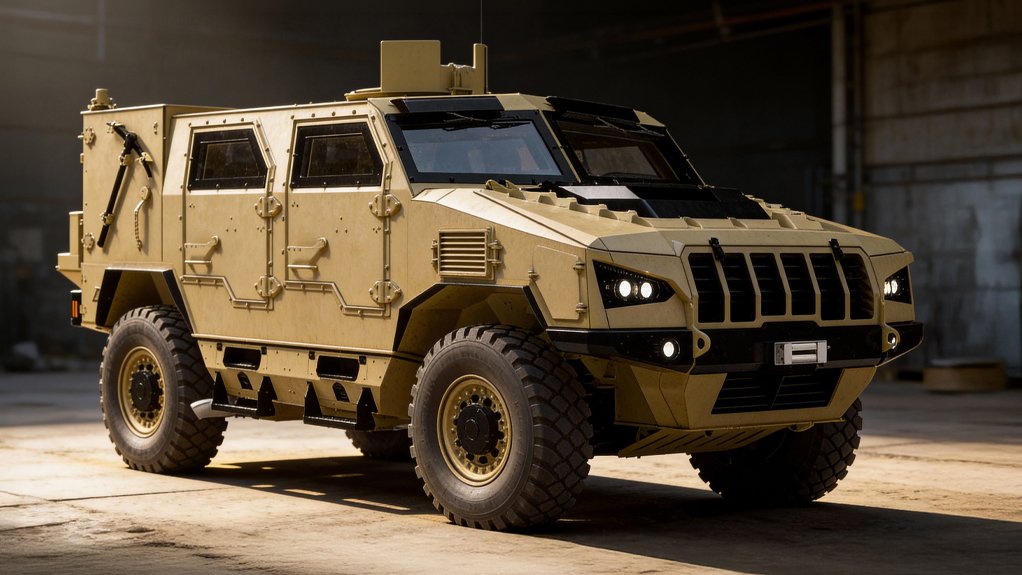
A rendering of the soon-to-be-launched light armoured military vehicle from Paramount Group. The company will unveil the vehicle at the upcoming Africa Aerospace and Defence expo
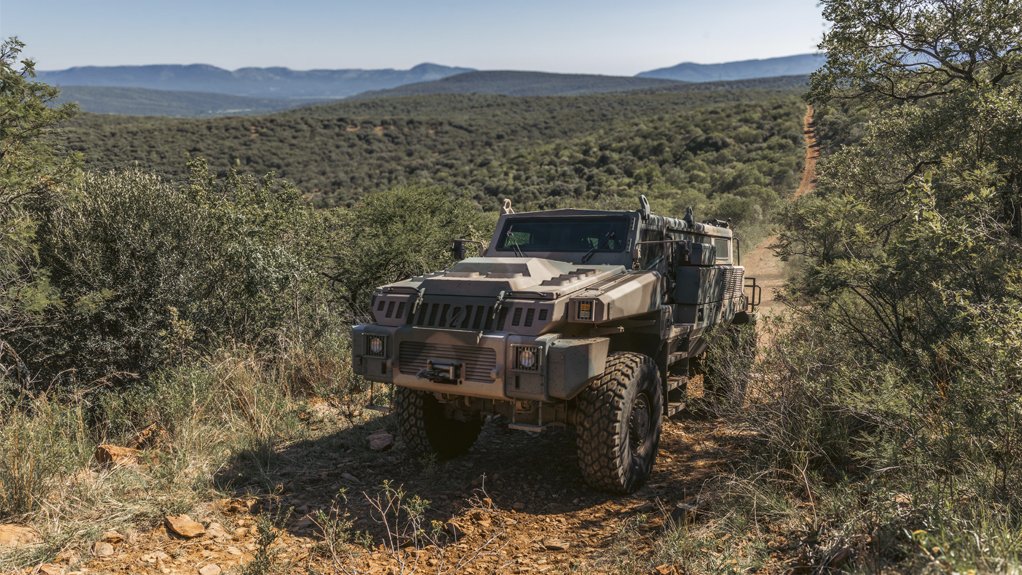
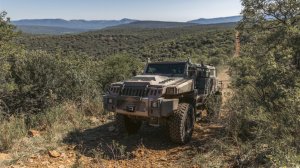
Paramount Group's Marauder 4 X 4 armoured personnel carrier
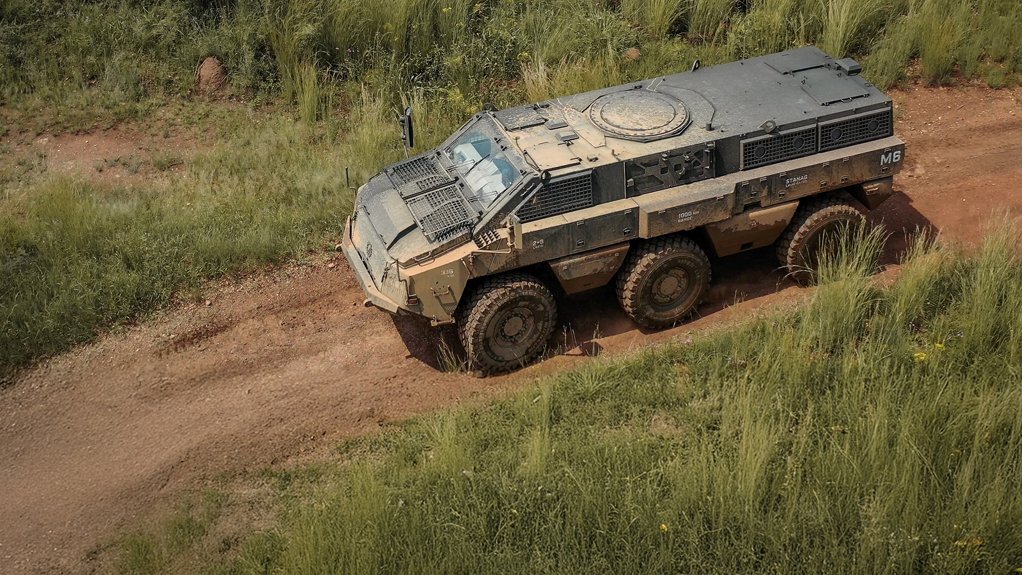
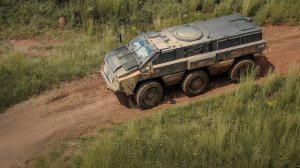
Paramount Group's Mbombe 6 X 6 armoured personnel carrier
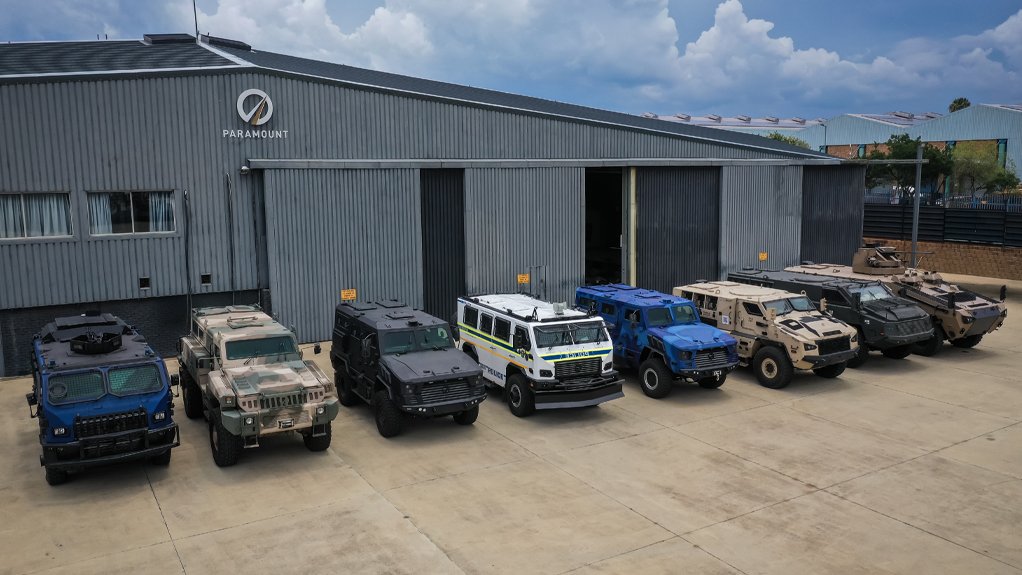
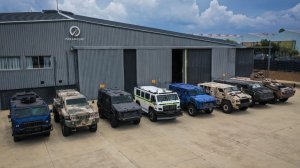
Paramount Group's Land Systems South African portfolio of products



Aerospace and defence company Paramount Group is preparing to unveil a new locally manufactured armoured vehicle at the upcoming biennial Africa Aerospace and Defence (AAD) expo, which will be held at Air Force Base Waterkloof, in Tshwane, from September 16 to 20.
While Paramount Group is yet to reveal the name of the new vehicle, Paramount Land Systems CEO Deon Grobler said the new vehicle fitted into the portfolio in the more mobile, lighter end of the spectrum and was classified as a light armoured military vehicle (LAMV).
“We are extremely proud of what we have achieved with [the introduction of the LAMV],” he said at a media product demonstration day on August 26.
The LAMV will be available in Africa with either a 300 hp engine or 450 hp engine.
Potentially bearing similarities to the jointly-developed Simha 4 X 4 that was unveiled in June at this year’s biennial Eurosatory defence expo in France, the new LAMV is designed as a highly adaptable, modular and mission-configurable platform.
It is intended to address one of the most pressing capability requirements facing modern armed forces – the need for a protected, highly mobile, multi-role vehicle able to operate across a broad spectrum of missions ranging from reconnaissance, internal security and border protection to special operations, command-and-control, troop transport and force protection.
CAPABILITY DEMONSTRATION, DEFENCE SOVEREIGNTY
Paramount Group’s pre-AAD demonstration day on August 26 served to showcase the capabilities, ruggedness and ease of operation (even by untrained drivers) of the company’s full portfolio of locally available land systems.
Various obstacles – including gradient ascents and descents of up to 60o, a severe axle-twister course designed to demonstrate agility and differential-lock capability and rough cross-country terrain – were tackled at the Gerotek Test Facility, near Hartbeespoort dam.
The vehicles were put through their paces to demonstrate full-day operability under demanding, hot conditions, with remarkably little damage sustained, limited to the loss of a single rear-view mirror as a result of overhanging vegetation on the cross-country track.
Meanwhile, at the demonstration day, Paramount Group chairperson Mathews Phosa emphasised that South Africa had a responsibility to preserve the capabilities built by generations of engineers, manufacturers and defence specialists.
This is particularly important when South African National Defence Force personnel are deployed in some of Africa’s most challenging environments, including the Democratic Republic of Congo and Mozambique.
“When we send South African soldiers into harm’s way, they deserve the best equipment we can provide,” he said, stressing that protection, mobility, firepower, communications and situational awareness were matters of life and death.
“The Ratel. The Rooikat. Our mine-protected vehicles. Technologies born from uniquely South African requirements that went on to influence defence industries around the world. This is not simply history, it is a capability that still exists today,” highlighted Phosa. The Ratel and Rooikat were both developed by Armscor and manufactured by Sandock-Austral.
Against this backdrop, he questioned why South Africa was looking abroad for equipment when much of the required capability could be designed, developed and manufactured domestically.
Phosa cited the requirement for a modern 8 X 8 infantry fighting vehicle under the Hoefyster programme as an example. With decades of experience in armoured vehicle design, and platforms such as Paramount’s Mbombe 8 demonstrating contemporary engineering and manufacturing capabilities, he believed South Africa should be asking not whether it could build the equipment its soldiers needed, but why it was not buying more of it.
Such local procurement endeavours, Phosa argued, should be viewed as investments in the country’s broader defence-industrial base. Government spending on locally developed defence systems supported South African intellectual property, engineering expertise, manufacturing capacity, skills development and employment, he said.
Phosa also pointed to the international success of South African defence technology, noting that Paramount Group had taken locally developed technologies into global markets through industrial partnerships. This was being done in tandem with a growing number of African countries seeking greater defence-industrial sovereignty through local manufacturing, skills development and technology partnerships.
Phosa asserted that South Africa should lead this movement while ensuring that research, development, engineering and intellectual property remain anchored domestically.
In doing so, he said that developing capabilities in South Africa and exporting them abroad could make defence an economic multiplier, creating highly skilled jobs, sustaining engineering disciplines, driving research and development, generating export revenue and attracting investment.
Ultimately, he argued, South Africa needed a serious national conversation about defence procurement – one that recognised a strong domestic defence industry as fundamental to both national security and strategic autonomy.
Meanwhile, Grobler also noted that as a result of growing security threats in Europe, defence spending in the region had “changed completely”, resulting in renewed interest in modern defence systems.
Article Enquiry
Email Article
Save Article
Feedback
To advertise email advertising@creamermedia.co.za or click here

Projects

Latest Multimedia
Latest News

Showroom
Multotec, recognised industry leaders in metallurgy and process engineering help mining houses across the world process minerals more efficiently,...
VISIT SHOWROOM
The Beneficiation Academy is a certified training institution that follows all compliance legislation and is accredited with various Sector...
VISIT SHOWROOM

Press Office
Announcements
What's On
Subscribe to improve your user experience...
Option 1 (equivalent of R125 a month):
Receive a weekly copy of Creamer Media's Engineering News & Mining Weekly magazine
(print copy for those in South Africa and e-magazine for those outside of South Africa)
Receive daily email newsletters
Access to full search results
Access archive of magazine back copies
Access to Projects in Progress
Access to ONE Research Report of your choice in PDF format
Option 2 (equivalent of R375 a month):
All benefits from Option 1
PLUS
Access to Creamer Media's Research Channel Africa for ALL Research Reports, in PDF format, on various industrial and mining sectors
including Electricity; Water; Energy Transition; Hydrogen; Roads, Rail and Ports; Coal; Gold; Platinum; Battery Metals; etc.
Already a subscriber?
Forgotten your password?
Receive weekly copy of Creamer Media's Engineering News & Mining Weekly magazine (print copy for those in South Africa and e-magazine for those outside of South Africa)
➕
Recieve daily email newsletters
➕
Access to full search results
➕
Access archive of magazine back copies
➕
Access to Projects in Progress
➕
Access to ONE Research Report of your choice in PDF format
RESEARCH CHANNEL AFRICA
R4500 (equivalent of R375 a month)
SUBSCRIBEAll benefits from Option 1
➕
Access to Creamer Media's Research Channel Africa for ALL Research Reports on various industrial and mining sectors, in PDF format, including on:
Electricity
➕
Water
➕
Energy Transition
➕
Hydrogen
➕
Roads, Rail and Ports
➕
Coal
➕
Gold
➕
Platinum
➕
Battery Metals
➕
etc.
Receive all benefits from Option 1 or Option 2 delivered to numerous people at your company
➕
Multiple User names and Passwords for simultaneous log-ins
➕
Intranet integration access to all in your organisation